
Today, POECurrency is here to discuss Delve mechanic in the 3.28 league. As a reliable strategy that operates independently of traditional mapping, Delve allows players to escape the unpredictability of random map modifiers.
By focusing on farming specific nodes, cities, and bosses, it offers a stable and lucrative source of currency, with potential earnings reaching upwards of 40+ Divine Orbs per hour. This makes it an ideal strategy for everyone, from newcomers just starting their league journey to veteran players who simply love the thrill of Delve exploration.
This strategy is particularly relevant in PoE 3.28, given the comprehensive rework of Atlas of Worlds, where maps have now been standardized across tiers. Due to changes in how maps are consumed, the demand for consumables that boost map drop rates and monster density has surged significantly. Consequently, more players are seeking farming methods that offer consistent returns.
Delve is one such mechanic well worth your consideration; whether you are in the early, mid, or late stages of Path of Exile Mirage league, this strategy remains exceptionally efficient.
Shallow Delve vs. Deep Delve
Before we dive in, let’s clarify a fundamental concept. Broadly speaking, Delve is divided into two distinct categories: Shallow Delve and Deep Delve.
As the name suggests, Shallow Delve refers to areas at depths of less than 300. This approach emphasizes horizontal farming, specifically excavating along the cavern walls to rapidly and reliably acquire Fossils and Resonators. The difficulty level is moderate and highly manageable.
On the other hand, Deep Delve refers to areas with a depth of over 600, where the deeper you go, the more powerful the monsters you encounter become. Therefore, Deep Delve is an even harsher testing ground, where only the most powerful characters can survive. As its difficulty rises, you will experience the most challenging content in the entire game.
However, Deep Delve is not the topic POECurrency is here to discuss today. If your goal is to generate substantial currency gains with minimal effort, our focus must remain on Shallow Delve.
This playstyle requires very low initial investment yet yields incredibly generous returns. It is not only fast-paced, simple to execute, and highly profitable, but the vast majority of the player base has yet to venture into this domain, largely because many people simply haven’t realized just how astonishing the returns from this playstyle truly are.
Why is Delve worth farming?
Setting aside the currency gains for a moment, what other advantages does farming Delve offer? First and foremost, the efficiency of XP acquisition in this mode is exceptionally high. Furthermore, the operational cost is extremely low; you simply enter Delve, start exploring, and that’s it. There is no need to consume Scarabs or Astrolabes, and you can even completely bypass the traditional process of map rolling.
If you choose to explore only the shallower regions of Delve, you can easily handle the content completely stress-free, while even watching TV on the side.
Of course, in addition to the aforementioned benefits, Delve mode also yields vast quantities of Path of Exile currency, a fact largely attributable to the drops of Fossils and Resonators found within.
Following Path of Exile 3.28 update, Fossil mechanic underwent a significant overhaul. Now, even the most common and inexpensive fossils on the market command a price of 50–60 Chaos Orbs each. Rarer items, such as Fractured Fossils, can fetch upwards of 70 Chaos Orbs, or even exceed the value of a single Divine Orb.
More importantly, there is now essentially only one optimal method for farming Fossils: exploring Delve. This is one of the primary reasons why running Delve proves to be such a lucrative endeavor.
Another core drop within Delve is Resonator, a critical item required in PoE 3.28 for crafting gear using Fossils. Their market value varies widely: common varieties are worth roughly one Chaos Orb each, while items like 4-Socket Resonators can command prices reaching around 1.5 Divine Orbs. Crucially, these items drop with considerable frequency.
Beyond these specific items, you will also randomly stumble upon a wealth of various basic currencies and scarabs. This becomes particularly true as you delve deeper into the mines; while the difficulty level certainly escalates, the rewards become correspondingly richer, to the point where you may even find yourself picking up a fair number of randomly dropped Divine Orbs.
How Does It Work?
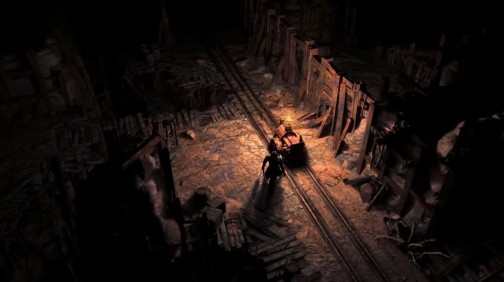
Now, let’s take a look at how this Delve farming strategy actually functions. Delve is an infinitely expanding subterranean network, dotted with various nodes, each corresponding to a specific type of reward. You are tasked with escorting a mine cart as it travels between various nodes.
The depths of Delve are shrouded in absolute darkness, yet your mine cart radiates light. Be warned: should you stray beyond the illuminated radius, the darkness will inflict a stacking damage-over-time debuff upon you. While hugging the mine cart and following the predetermined path certainly yields decent rewards, the truly spectacular aspects of Delve, its greatest treasures and challenges, lie hidden within that very abyss of darkness.
Biomes & Reward Nodes
This brings us to the various biomes found within Delve, as well as the diverse array of reward nodes you can discover within these regions.
In total, Delve features 10 distinct ecological zones: specifically, 7 natural biomes and 3 special city zones, each offering unique bosses for you to challenge.
Furthermore, each distinct biome type possesses its own exclusive set of fossil drops. Consequently, when hunting for reward nodes, we typically prioritize seeking out those specific fossil nodes.
These natural biome nodes can be broadly categorized into two types. The first category is the common Smuggler’s Stash, which usually contains a large number of ordinary quality Fossils; however, each Fossil can still be sold for 5 to 9 Chaos Orbs. Thus, if you manage to loot 5 to 10 such fossils from a single node, it constitutes a truly excellent haul, especially considering that clearing such a node takes you a mere 30 seconds.
The second type consists of nodes exclusive to specific biomes. Some of the drops found within these nodes are of extremely high value, while others turn out to be utter trash. Ultimately, success in these instances depends largely on your luck.
As for the city zone nodes, the main attraction is, naturally, the various boss battles. Throughout your Delve expedition, you will encounter three different types of city zones. On the map, these zones are distinctly marked by a special golden border.
Inside these zones, you will find two different types of rooms. Although the specific names of these rooms vary depending on the type of city zone they belong to, their internal layouts are largely identical: typically, they consist of nothing more than piles of treasure chests.
Of course, these rooms are also teeming with hordes of monsters. You may choose to stop and engage them in combat, though in practice doing so is entirely unnecessary. Since most monsters in the Shallow Delve do not drop particularly lucrative loot, it certainly doesn’t hurt to clear them out incidentally while en route to your target Fossil nodes; however, it is absolutely not worth your time to deliberately stop and farm them specifically for drops.
To ensure you can dispatch these monsters with a single strike, thereby avoiding unnecessary entanglement, your gear will be put to the test. It is recommended that you buy cheap POE currency on POECurrency.com and give your build gear a complete upgrade to improve farming efficiency. Once that’s done, simply loot every last item from these abandoned chambers and make a hasty exit.

Accumulating Azurite & Upgrading Voltaxic Generator
As you explore Delve, the nodes you will encounter most frequently are resource points such as Azurite Fissures and Molten Cavities, essentially, any location capable of yielding Azurite.
In this context, Azurite serves two primary purposes. Its foremost function is to upgrade your Voltaxic Generator. Upon upgrading, you will gain access to several beneficial effects.
First and foremost, it increases your maximum Sulphite capacity. This means you can run more maps consecutively and stockpile a larger reserve of Sulphite resources.
Additionally, upgrading boosts both your Darkness Resistance and your Light Radius. Consequently, during the early stages of the game, it is advisable to invest your initial points into increasing your maximum Sulphite capacity; this prevents the awkward situation where your Sulphite storage overflows the moment you stumble upon your very first resource node.
Next, you should prioritize enhancing your Darkness Resistance and Light Radius attributes. Ideally, you should aim to maintain a balanced progression between these two stats. Concurrently, you should also upgrade your maximum Flare and Dynamite carrying capacities. This ensures that you can farm efficiently within dark zones, avoiding the frustrating scenario where you run out of explosives after breaching just a couple of walls, leaving you unable to venture any deeper into Delve.
Essentially, once you have maxed out all the relevant attributes, you can utilize your remaining Azurite resources to purchase items from your old friend, Niko.
Among the available options, Primitive Chaotic Resonator represents the most worthwhile investment. Although their individual market value may not be particularly high, their value remains remarkably stable; once you have accumulated a sufficient quantity, selling them can generate a substantial return in POE currency.
That concludes Delve farming guide that POECurrency wanted to share with you today. With the release of Path of Exile 3.28, the developers have truly revamped this mechanic, particularly for the shallower depths of Delve, making it one of the most effective ways to quickly earn currency this season!
Learn how to most efficiently upgrade your Voltaxic Generator, target high-value biomes, and farm City nodes to secure a steady stream of income. No Scarabs required, just pure, unadulterated underground profit. Embark on your Delve expedition in Mirage League today, and say goodbye to the tedious grind of traditional mapping!